
Arts & Culture Master Plan News

New Jersey Planning and Redevelopment Conference
New Jersey Planning and Redevelopment Conference
June 5, 2024 - June 7, 2024
APAC Executive Director, Carrie Turner, along with Asbury Park Director of Planning and Redevelopment, Michele Alonso, and FCA Director of Planning and Urban Design, Eric Galipo, will be discussing the Asbury Park Arts & Culture Plan on a panel entitled Cultivating Community: Igniting Places Through Community-Driven Arts and Culture Planning.

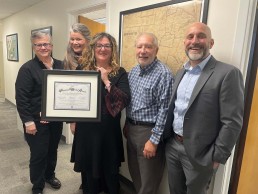
Asbury Park’s newly adopted Arts & Culture Plan Wins...
Asbury Park’s newly adopted Arts & Culture Plan wins County recognition for leadership in planning, exemplary public private-partnership
Collaborative effort between city, residents and artists leads to blueprint for vibrant cultural future
Tap into Asbury Park
Online Newspaper, By Alissa Deleo December 20, 2023
ASBURY PARK, NJ – The City of Asbury Park, known for its vibrant, multi-faceted arts scene, was recognized on Monday, December 18, by the Monmouth County Planning Board for the creation and adoption of the Arts & Culture Plan as a component of the City’s Master Plan.
The plan articulates a vision and strategies to promote the City’s cultural assets, stimulate economic growth and improve residential quality of life.
The Arts & Culture Plan is the result of an 18-month collaboration between the City of Asbury Park and the non-profit Asbury Park Arts Council (APAC).
In 2017, one of the co-founders of APAC, Mike Sodano, participated in the City’s decennial Master Plan Re-examination Committee.
As a local creative business owner, he worked with other committee members to formally recognize the need for an Arts & Culture plan for Asbury Park.
As a result, the committee recommended that the City create and adopt an Arts & Culture Plan as a component of the City’s Master Plan.
With the official recommendation for an updated master plan, Sodano, then owner of the ShowRoom Cinema, enlisted Jenn Hampton, co-owner of Parlor Gallery and curator of the Wooden Walls Public Art Project, to form the Asbury Park Arts Council.
They added several more like-minded townspeople and APAC was officially incorporated in 2019, with a primary goal to work with the City on the creation of an Arts & Culture Plan.
The Covid-19 pandemic slowed but didn’t stop APAC’s progress.
They began an active dialogue with City officials and advisors and conducted research into other plans.
During this time, they also raised their first grant funds from Monmouth Arts, the local county arts agency, to support the project.
The groundwork and research paid off in 2022 when APAC received significant grant funding from the Monmouth County government from COVID-19 relief funds earmarked specifically to support non-profit organizations.
APAC and the City of Asbury Park then engaged the leading architecture, planning, and design firm, FCA, to work with them on developing the Arts & Culture Plan.
An added bonus was that FCA’s Director of Planning and Urban Design, Eric Galipo, is a life-long resident of Asbury Park.
With the City, APAC, and FCA ready to start work on the Arts & Culture Plan, a steering committee of creative leaders and local, regional, and state government representatives kicked off the project in August 2022.
The planning process began with inventory, information gathering and public outreach activities that included online surveys, appearances at many community-based events, individual interviews, topical focus groups and multiple public open houses.
The information gathered informed the development of goals and strategies for the plan that culminated in six major recommendations and an implementation framework that lays out sequential steps for achieving the goals of the plan.
The recommendations focus on funding, staffing, partnerships, branding, placemaking and the development of a new community culture center.
The plan was adopted by the City’s Planning Board this past fall as an amendment to the Master Plan, incorporating it as an official part of Asbury Park’s vision for long-term growth and development.
At the Planning Board presentation of the document, Steering Committee member and Asbury Park resident Mary Eileen Fouratt, who works for the New Jersey State Council on the Arts, noted, “I am impressed with the amount of outreach conducted in creating this Plan. I work with communities statewide and not all of them take this much time to see what residents need.”
The Merit Award recognizes the partnership that brought the Arts and Culture Plan to fruition, as well as the way it advances many of the goals and objectives of the Monmouth County Master Plan, including supporting comprehensive planning approaches, promoting the protection of cultural resources and supporting creative placemaking.
“As a collective, our goal was to develop a strategy that uplifts the arts and culture within the Asbury Park community––through detailed research and local engagement; the plan outlines initiatives to bolster access to activities for creators, residents, and visitors,” Eric Galipo said.
“As a life-long Asbury Park resident and professional urban designer, I was honored to be part of the Plan’s development, and it’s affirming to see the Plan receive this recognition and award,” Galipo added.
Asbury Park Mayor John Moor, who is also a Planning Board member, said that the City greatly appreciates the recognition by the Monmouth County Planning Board for its Arts & Culture Plan.
“I believe we may be the only municipality in Monmouth County that has a plan like this, and I could not be more proud of the teamwork that went into getting it done,” Mayor Moor said, adding, “I especially like the way the recommendations of the Plan are presented as not “all or nothing,” or “now or never,” but laid out in incremental steps that are more realistic for the government to achieve.”

Multiplying The Cultural Power of Asbury Park
TriCityNews
Local weekly paper covering regional news and events covers Arts & Culture Plan Adopted into City's Master Plan
A Potential to Multiply the Cultural Power of Our City
Independent Asbury Park Arts Council Leads The Initiative - TriCity News March 16, 2023


ASBURY PARK — The battle against conformity brought on by the pres-sures of an economic boom is one that our beloved little city will always have to fight.
Asbury Park’s destiny was always to come back, with arts and culture leading the way. That happened. The challenge is to make sure that’s preserved.
So far, Asbury Park has stayed ahead of that curve. New people contin-ue to get involved with arts and culture. Even more importantly, strong leadership has develop in Asbury Park to defend and promote the arts.
A great example is the non-profit Asbury Park Arts Council (APAC). The group just achieved success with its first major project: Passage of the Asbury Park Arts and Culture Plan by the Planning Board last month, which means it becomes part of the city’s master plan.
That’s not just some geeky government thing. Being a part of the city’s master plan — the legal document that guides zoning decisions and other planning priorities — gives the Arts and Culture Plan credibility, both inside and outside Asbury Park. And that can multiply the city’s cultural power.
The Arts and Culture Plan can lead to more grant awards. It will become a guide for policy decisions, including zoning decisions. The plan identifies various underutilized assets and determines how the city can maximize their effectiveness for the arts. And the plan makes recom-mendations for arts and culture activities in various parts of the city, which may have different needs to serve.
The Arts and Culture plan lists several action items, two of which we find particularly noteworthy: establishing a funding stream for arts and culture, and a community culture center.
The funding stream can be a modest dedicated art tax that taxpayers probably wouldn’t even notice, but could generate a low six figure reve-nue for art. Deputy Mayor Amy Quinn has been for that, and the adop-tion of the arts plan will hopefully now hasten the art tax placement on the ballot for voter approval. Meanwhile, the community culture center may indeed come about once it’s recognized as a city-wide priority as per the Arts and Culture plan. (We’d love to see the city grab the beauti-ful old bank building, now vacant, across from City Hall for this purpose.)
Also noteworthy is who put the plan together. Here’s the Asbury Park Arts Council board: Parlor Gallery owner Jenn Hampton (also the curator for the popular Wooden Walls mural project on the boardwalk), former ShowRoom owner Mike Sodano, Paul McEvily from Interfaith Neighbors, Paranormal Books owner Kathy Kelly, attorney and arts activist Bob Ellis, and Carrie Turner, formerly the General Manager of Madison Marquette’s boardwalk project. Turner also serves as acting Executive Director and coordi-nated the development of the Arts and Culture plan. Another recognized talent local to Asbury Park — planner Eric Galipo, who grew up in the city — served as the planning professional working with Turner to lead the development of the plan. Funding to develop the Arts and Culture Plan came initially from a seed grant from Monmouth Arts and then a grant awarded by the county government.
“It’s a powerful tool. It’s a roadmap,” said Turner about the plan.
“It focuses thinking about the city’s cultural assets and it identifies ways to im-prove and safeguard them,” she said. “It lays out recommendation and it shows the city how it could achieve the goals it set up for itself.”
(You can read the Arts and Culture Plan, and find out more about the Asbury Park Arts Council, by visiting the group’s website at asburyparkartscouncil.org.)
Because the Arts and Culture Plan is now part of the city’s master plan, “it has some heft,” Turner said. “It may not be binding, but it has significance. The city has now acknowledged the information collected, the synthesis of that collec-tion and the recommendations from the information and feedback. A lot of people got involved.”
Asbury Park is already recognized as an arts and culture center in New Jersey. Those outside in the arts field — particularly funders large and small who back the arts, like government entities and non-profit foundations — will understand the significance of a professionally well-developed Arts and Culture Plan ad-opted into the city’s master plan. Especially as objectives of the plan are met.
Turner said the Arts and Culture Plan is an example of “how the public and private sectors can work together to achieve the city’s goals.” The Arts Council wants to continue that momentum to help implement the plan itself, she said.
The Arts Council compiled a ton of data to develop the Arts and Culture Plan. A survey it developed was answered by 153 people. Twenty-three interviews were conducted with leading policymakers and arts stakeholders. Five focus groups were conducted, along with one public open house.
The information gathering led to some important results. For example, 48 per-cent of survey respondents indicated that the cost of arts events and programs limit their participation. Another finding was that 71 percent of survey respon-dents indicated they don’t learn about arts activities in time.
The Arts Council also did an inventory of what our 1.75 square mile city offers. The group counted 180 creators and contributors; 80 venues, places and fa-cilities for arts and culture; and 60 regular events and programs. That’s pretty wild.
How impressive is that? The data shows how remarkable Asbury Park remains in terms of its cultural power and influence, despite its small size. Leaders like those at the Asbury Park Arts Council — developing such projects as the Arts and Culture Plan — is how we keep it that way.

SAVE THE DATE
Arts & Culture Plan/Planning Board Meeting
Monday, August 21st at 7pm, City Council Chambers, 1 Municipal Plaza – will be taped for APTV

Asbury Pod - The- Asbury Park Arts Culture Plan
Asbury Pod discuss updates to the Asbury Park Arts and Culture Plan and welcome back Carrie Turner from the Asbury Park Arts Council. They also welcomed Eric Galipo from Francis Cauffman Architects who did the hard work of designing the Arts & Culture plan which will now be presented to the City Council.
AsburyPod also gratefully acknowledges the support of Jenn Hampton from the Parlor Gallery on Cookman Avenue in Asbury Park who let us record this episode in her lovely space. Thanks Jenn!


Arts & Culture Plan Public Meeting
Public Meeting March 30, 2023
There was a presentation of the progress on the Arts & Culture Plan on March 30th at the Public Library. The next step is for the Arts & Culture Plan draft document to be submitted to the Planning Board, who will consider adopting it as an element of the city’s Master Plan. A date for the Planning Board hearing is not yet scheduled.

APAC Presentation
TAPintoAsbury Park
Your Neighborhood News Online - By Alissa Deleo
Asbury Park Arts Council to host presentation about proposed Arts and Culture plan March 30 at 6 p.m. at the Asbury Park Library
ASBURY PARK, NJ — A public presentation on the city’s proposed Arts and Culture plan will be made by the Asbury Park Arts Council on Thursday, March 30, at 6 p.m. at the Asbury Park Public Library, located at 500 First Ave.
Details about the plan, the arts council’s findings and its major recommendations for the community will be discussed.
The Asbury Park Arts and Culture Plan is an endeavor undertaken by the city in conjunction with the Asbury Park Arts Council, Monmouth Arts, the Monmouth County Department of Planning and the New Jersey State Council of the Arts.
All funding for the arts and culture plan is being provided by Monmouth Arts and Monmouth County’s COVID-19 Recovery Grant Program for non-profit organizations.
Throughout the past eight months, its planning process has been guided by a steering committee comprised of representatives from the city council, the planning and zoning boards, the department of planning and redevelopment, the Asbury Park Arts Council, Monmouth County Department of Planning and New Jersey State Council on the Arts.
During this period, the steering committee received regular updates on the research, data gathering and community engagement opportunities of the planning team, with the community being consistently involved in the creation of the plan.
The City Council unanimously approved a resolution referring the Arts and Culture Plan to the planning board for review and adoption as an amendment to the city’s master plan during its March 22 meeting.

Arts & Culture Plan Presented to City of Asbury Park Council
TriCityNews
Local weekly paper covering regional news and events covers the Arts & Culture Plan presented to the AP City Council
A Potential to Multiply the Cultural Power of Our City
Independent Asbury Park Arts Council Leads The Initiative - TriCity News March 16, 2023


ASBURY PARK — A group of some of the most effective arts and cultural leaders in the city are moving forward with the creation of an Arts and Culture plan for Asbury Park.
This plan has the potential to multiply the cultural power of our city. Funded by a recent county grant, the Asbury Park Arts Council (APAC) — an independent 501(c)(3) non-profit organization — put together the draft plan and presented it to the City Council just before our deadline.
The next step is referral to the Planning Board, who’d then adopt the Arts and Culture Plan as an amendment to the city’s master plan. That would give it legal authority. Before that, however, APAC will provide a public presentation of the draft plan at the Asbury Park Public Library on March 30 at 6 pm. The Planning Board would have their own public hearings on the plan.
This newspaper understands the value of this project. A detailed Arts and Cul-ture Plan can lead to more grant awards. It becomes a guide for policy deci-sions, including zoning decisions. The plan identifies various underutilized as-sets and determines how the city can maximize their effectiveness for the arts. And the plan makes recommendations for arts and culture activities in various parts of the city, which may have different needs to serve.
“The Asbury Park Arts Council (APAC) works to support, advocate and pro-mote arts-centric initiatives, businesses and development,” states the group’s mission statement. “Our primary goal is to ensure the arts are considered in municipal policy-making via the creation and implementation of an Arts and Culture plan within the Asbury Park Master Plan.”
The Arts Council compiled a ton of data to develop the draft plan. A survey it developed was answered by 153 people. Twenty-three interviews were conduct-ed with leading policymakers and arts stakeholders. Five focus groups were conducted, along with one public open house.
The information gathering led to some important results. For example, 48 per-cent of survey respondents indicated that the cost of arts events and programs limit their participation. Another finding was that 71 percent of survey respon-dents indicated they don’t learn about arts activities in time. (Sounds like the city government should start advertising all the offerings in the triCityNews!)
The Arts Council also did an inventory of what our 1.75 square mile city offers. The group counted 180 creators and contributors; 80 venues, places and facilities for arts and culture; and 60 regular events and programs. That’s pretty wild.
Those figures also confirm what we’ve always said about our tiny city — based on its size and population, we are indeed a powerful center for arts and culture. (And the data of the Arts Council doesn’t even measure Asbury Park’s impact on the areas around it in terms of building the arts and culture. That makes the city even more powerful.)
For example, compare the Asbury Park Arts Council’s data for Asbury Park to Austin, Texas. Austin has 965,000 people compared to 15,000 for Asbury Park. That’s 65 times as many people. Multiplying what Asbury offers by 65 to com-pare to Austin gives these result: 11,700 creators and contributors; 480 ven-ues, places and facilities for arts and culture; and 3,900 regular events and programs.
How impressive is that? The data shows how remarkable Asbury Park remains in terms of its cultural power and influence.
Implementing an Arts and Culture plan as a matter of law by including it in the master plan will multiply and preserve all this. For example, the draft plan lists several action items, two of which are particularly noteworthy: establishing a funding stream for arts and culture, and a community culture center.
The funding stream can be a modest dedicated art tax that taxpayers probably wouldn’t even notice, but could generate a low six figure revenue for art. Deputy Mayor Amy Quinn is for that, and we predict one day relatively soon it will be on the ballot for voter approval. The community culture center may indeed come about once it’s recognized as a city-wide priority as per the Arts and Culture plan.
Also noteworthy is who’s doing all this. It’s a great representation of several of our city’s arts leaders.
Here’s the Asbury Park Arts Council board: Parlor Gallery owner Jenn Hampton, former ShowRoom owner Mike Sodano, Paul McEvily from Interfaith Neighbors, Paranormal Books owner Kathy Kelly, attorney and arts activist Bob Ellis, and Carrie Turner, formerly the General Manager of Madison Marquette’s boardwalk project. Turner also serves as acting Executive Director and coordinated the development of the APAC’s plan. Another recognized talent local to Asbury Park — planner Eric Galipo, who grew up in the city — served as the planning professional working with Turner to lead the development of the plan.

Asbury Park Arts & Culture Plan
PUBLIC MEETING
Save the Date 3/30/23
Asbury Park Arts Council is hosting an upcoming open public meeting for the Arts & Culture Plan.
The details:
Asbury Park Arts & Culture Plan
Public Meeting
Thursday, March 30th
6pm
Asbury Park Library -500 1st Ave, Asbury Park, 07712

Arts and Culture Plan proposed to be included in city’s master plan
TAPintoAsbury Park
Your Neighborhood News Online - By Alissa Deleo
A public presentation of the plan’s major recommendations will take place March 30 at 6 p.m. at the Asbury Park Library
ASBURY PARK, NJ — An arts and culture plan may soon become a key component included within the city’s master plan after an update about its development was made by Eric Galipo during a recent city council meeting.
Galipo, who is a professional planner and urban designer representing the city and the Asbury Park Arts Council, asked the council to consider a resolution of referral to the planning board for review and adoption, which they determined will be voted on at the March 22 city council meeting. If the council approves the resolution, it will then come before the planning board in April for review and once again for eventual adoption in May.
At the meeting, Galipo briefly introduced the plan, including recent research, findings and recommendations from an anonymous survey about the status of the arts and potential future developments in the city which began last August.
Sign Up for FREE Asbury Park Newsletter
Get local news you can trust in your inbox.
subscriber@example.com
This site is protected by reCAPTCHA and the Google Privacy Policy and Terms of Service apply.
A public presentation of the plan’s major recommendations will be made on Thursday, March 30, at 6 p.m. at the Asbury Park Public Library, located at 500 First Ave.
The Asbury Park Arts and Culture Plan is an endeavor undertaken by the city in conjunction with the Asbury Park Arts Council, Monmouth Arts, the Monmouth County Department of Planning and the New Jersey State Council of the Arts.
Galipo’s role is to provide professional arts and cultural planning services through his firm Francis Cauffman Architects (FCA), which is a multidisciplinary planning and design firm with offices in Philadelphia, New York and Orlando.
The firm has completed arts and culture plans for municipalities and institutions, including the St. Louis Garment District Master Plan, The Salt Lake City Arts & Culture Plan, the City of Ocala Arts and Public Places Plan and is currently in the process of developing a public art master plan for the City of Hoboken.
“Arts and culture plans can be powerful tools for cities and communities to foster community cohesion and civic pride, identify gaps and opportunities in the city’s cultural landscape. It’s a way to leverage arts and culture as generators of economic development and employment growth and to enhance the quality of life of residents through community-based arts and recreational activities,” Galipo said.
All funding for the arts and culture plan is being provided by Monmouth Arts and Monmouth County’s COVID-19 Recovery Grant Program for non-profit organizations.
During Galipo’s presentation, he further addressed the question of why an arts and culture plan is necessary for Asbury Park. “The 2017 city master plan defined a vision for the city as a place with a thriving arts community, a year-round economy, expanded community facilities and an outstanding quality of life,” Galipo explained.
“There was also a specific recommendation that the city would complete an arts and culture master plan that would inventory the arts and cultural assets of the city and identify areas most suitable for arts and culture as well as the uses, programs and actions necessary to support arts and culture in the city,” he added.
Throughout the past eight months, its planning process has been guided by a steering committee comprised of representatives from the city council, the planning and zoning boards, the department of planning and redevelopment, the Asbury Park Arts Council, Monmouth County Department of Planning and New Jersey State Council on the Arts.
During this period, the steering committee has received regular updates on the research, data gathering and community engagement opportunities of the planning team, Galipo noted, adding that the community has also been consistently involved in the creation of the plan.
He explained that the planning team met with the public to learn further about their individual attitudes on arts and culture as well as what more they believe is needed in the city.
In this pursuit, the arts council received 153 responses to an online survey as of March 8 and conducted more than 20 interviews with representatives of city government and non-profit organizations, the Asbury Park school system and others working in arts and culture throughout the city.
The arts council also conducted five focus groups with local creators and producers of cultural and community activities and hosted an open house at the Blackbird Community Commons in December with more than 80 participants in attendance.
“Overall, we can identify more than 500 individual touch points gained through our participation in multiple community events where individual conversations and actual community members rounded out our understanding of the cultural landscape and the needs of the city and the community,” Galipo said.
During the study, the arts council undertook an inventory of arts and culture assets throughout the city.
“In this study, we were able to identify nearly 180 individual creators and organizations related to arts and culture as well as 80 venues, places and facilities capable of supporting arts and cultural activity and over 60 recurring programs and events that provide a strong sense of Asbury Park as a significant contributor to the regional art and cultural landscape and economy,” Galipo said.
The study examined resources available through community facilities but found that there are few spatial resources that are perceived as accessible or welcoming to the public, he added.
“The precious few community facilities that we do have are working hard to provide services, but this study has found more services and facilities are needed to fully engage the residential community, individual creative pursuits and collective activities,” Galipo said.
The study charted the frequency of all recurring programs taking place throughout the city to understand how cultural activity is distributed throughout the year.
“What we discovered is that the seasonal nature of the city has a significant impact on the level of cultural activity, with most events occurring in the warmer months of the year,” Galipo said.
The study examined the prevalence of free and public events and how this compares to that of paid and private events. Recorded data additionally concluded that while paid and private events generally continue throughout the year, almost all free and public programming offered to the community is limited to the warm season.
“This is highly indicative of a lack of high quality low-cost indoor facilities for hosting community programs in the off-season,” Galipo said.
The research charted the city’s active seasonal formal venues, which are The Stone Pony summer stage and the Fifth Avenue rooftop. The Saint, Asbury Lanes, House of Independents, and The Stone Pony are listed in the study as activity year-round indoor venues.
The study stated that 72% of the city’s indoor venue capacity is inactive, naming Convention Hall, Paramount Theatre and Savoy Theatre on Mattison Avenue, which closed in 1976.
“It cannot be understated the detrimental impact this has on the local economic and employment picture when it comes to arts and culture,” Galipo said.
Outdoor recreation beyond the beachfront, dining and live music need to be leveraged, according to the survey, which notes that historical tourism, learning and making, dance, theater and other performing arts all have significant potential for increasing Asbury Park’s share of the regional creative economy for engaging its residents and visitors creative pursuits.
Galipo added that he hopes to see collaboration and coordination between the city’s private and non-profit sectors, which he believes could help leverage spatial assets, secure funding and connect creators and audiences.
Galipo concluded the presentation by explaining four goals of the arts and culture plan, which are to augment the city’s year-round quality of life, expand the cultural production ecosystem, foster inclusion, community cohesion, well-being and lifelong learning and support tourism, creative enterprises and the cultural economy.
The plan identifies four general strategies that can contribute to meeting the goals. The first is to provide resources, facilities and programs for individual creativity, recreation and lifelong learning, while the second strategy is to align development, land use, funding and policies to support tourism and the homegrown creative economy.
“Asbury Park needs to do more in terms of modernizing its zoning code and looking for ways to include new and encourage other uses within our residential and commercial environments,” Galipo said.
The third strategy is to leverage the brand of Asbury Park as an inclusive city where creativity thrives.
“Our visual brand is inconsistent and could use some harmonization as well as provide an injection of creativity into the way we express our status as a seasonal beach community and a year-round artistic and creative community,” Galipo said.
The fourth strategy is to transform streets, parks and public spaces to support next-level art and cultural place-making, Galipo explained, adding, “We use our city’s streets to a high degree in Asbury Park, but more can be done to make sure that they feel more balanced between the needs of people and the needs of cars.”